
Bulkheads and margins
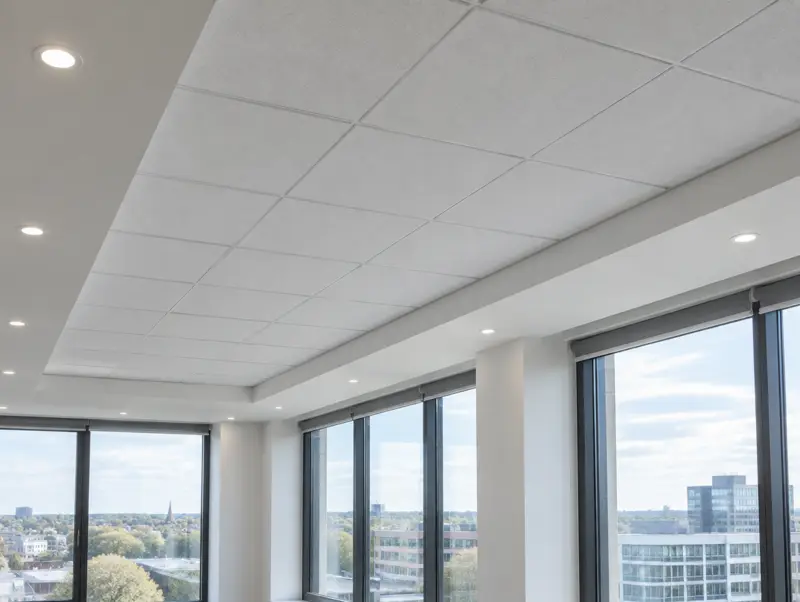
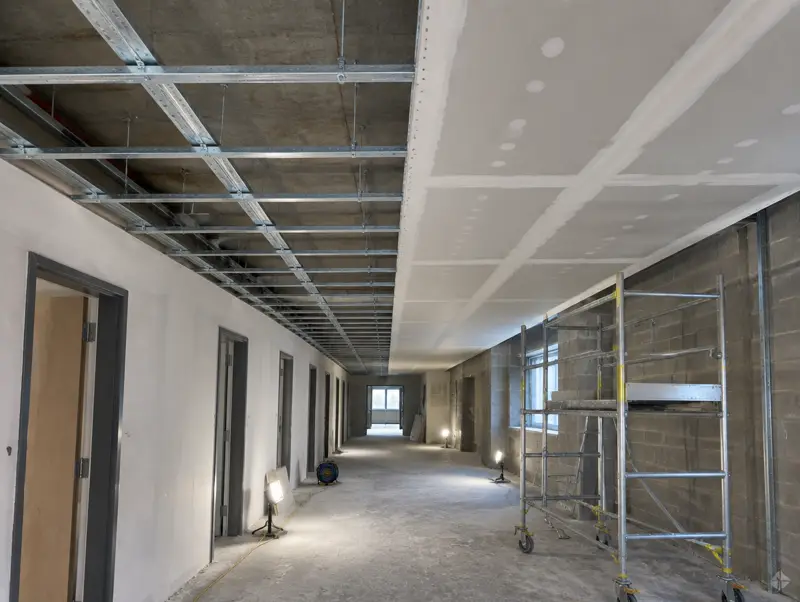
A bulkhead is a boxed-down section of ceiling, usually plasterboard on an MF or stud frame, used to hide beams, ductwork or a change in level, or to frame a grid ceiling with a clean perimeter.
How we do it
Perimeter bulkheads let a grid ceiling stop short of uneven walls and windows, hide curtain-wall head details and take downlights. Feature bulkheads mark out reception desks, kitchens or meeting zones without adding walls.
Getting the junction right is the craft. A shadow gap or edge trim where the bulkhead meets the grid gives a sharp line that hides small variations in the tiles.
What's involved
- MF or metal stud framing
- Plasterboard, taped and jointed or skimmed
- Shadow gap and edge trim junctions
- Downlight and access panel cut-outs
- Fire-rated build-ups where needed
Best for: Perimeters, window heads, beams, services runs and feature zones.
What happens after you get in touch
Send the details
Room size, postcode and what you want done, through the form, the guide-price tool, phone or WhatsApp.
Free survey
We measure, check the soffit, void depth and services, and agree the finished height and tile.
Fixed written quote
Named grid and tile products, programme, working hours, and exactly what is included.
Fit and hand over
Setting out, grid, services coordination and tiles, then a clean room and the product data.
Questions people ask
Why do bulkheads get priced per metre?
Their cost depends mostly on length and girth rather than area, so a linear rate is fairer.
Can a bulkhead hide a big duct?
Yes, as long as the room height allows it. We measure clearances on the survey.
Can lights go in a bulkhead?
Yes. Downlights and linear lights are commonly set into bulkheads; we coordinate positions with your electrician.

Where we fit ceiling bulkheads
We take on ceiling bulkheads across England, Scotland and Wales from our base in Birmingham. See the areas we cover or send your postcode with the form.