Acoustic ceilings
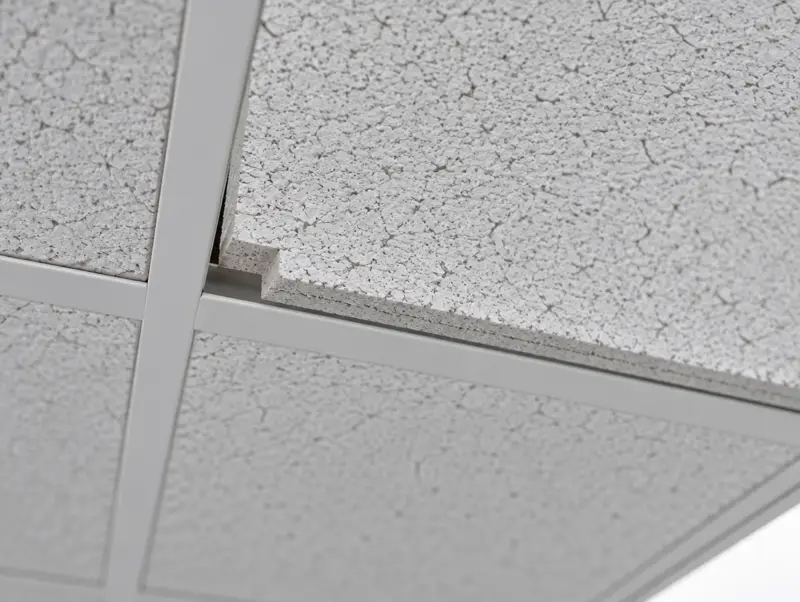
An acoustic ceiling uses high-absorption tiles, and sometimes denser backing, to cut echo inside a room and stop speech travelling over partitions into the next one. Those are two different problems and they need different tiles.

How we do it
Absorption is about the room you are standing in. It is graded A to E under BS EN ISO 11654, with Class A tiles absorbing 90% or more of the sound that hits them. Echoey open-plan offices, classrooms and restaurants need absorption.
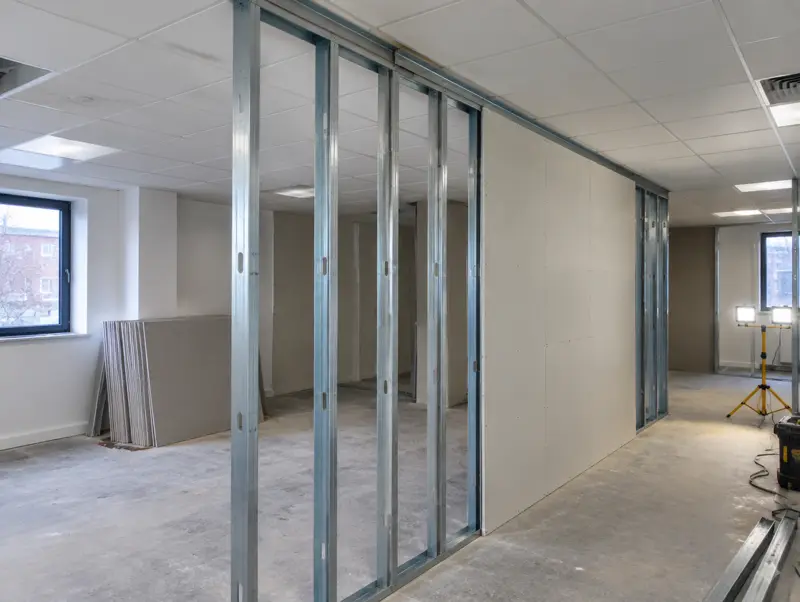
Attenuation is about the room next door. Where partitions stop at the ceiling, sound goes up through the tiles, along the void and down into the next room. That is measured as Dn,f,w in decibels, and the fixes are denser tiles, an acoustic barrier in the void, or taking the partition up to the soffit. We find out which problem you have before pricing either.
What's involved
- Sound absorption Class A–E to BS EN ISO 11654
- Room-to-room attenuation (Dn,f,w) quoted in dB
- Void barriers and over-lays where partitions stop at ceiling height
- Schools designed to Building Bulletin 93 targets
- Healthcare acoustics to HTM 08-01 where specified
Best for: Meeting rooms, open-plan offices, classrooms, clinics, restaurants and call centres.
What happens after you get in touch
Send the details
Room size, postcode and what you want done, through the form, the guide-price tool, phone or WhatsApp.
Free survey
We measure, check the soffit, void depth and services, and agree the finished height and tile.
Fixed written quote
Named grid and tile products, programme, working hours, and exactly what is included.
Fit and hand over
Setting out, grid, services coordination and tiles, then a clean room and the product data.
Questions people ask
Will acoustic tiles stop noise from the office next door?
Only if they are chosen for attenuation as well as absorption. Many high-absorption tiles are light and let sound through. If privacy between rooms is the issue we look at denser tiles or a void barrier above the partition line.
What is the difference between NRC and αw?
Both describe sound absorption. NRC is an American average; αw is the European rating that gives the A–E class used on UK datasheets. Compare tiles using the same measure.
Can you just swap our tiles for acoustic ones?
Often yes. If the existing grid is sound and the right module, we can lay acoustic tiles into it, which is far cheaper than a new ceiling.