
MF plasterboard ceiling or grid ceiling: which is right?
Choose a grid ceiling when you need cheap, fast installation and easy access to services everywhere. Choose an MF plasterboard ceiling for a seamless finish, curves and bulkheads, fire-resisting linings, or rooms like toilets and receptions where a plain plastered look suits.
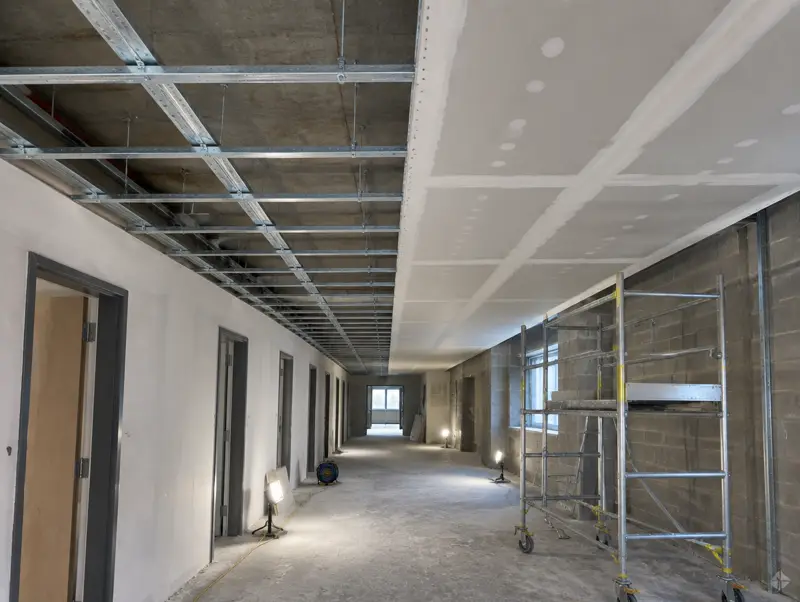
How do they differ?
A grid ceiling is a visible metal grid with lay-in tiles that lift out. An MF ceiling is a hidden steel frame lined with plasterboard and finished like a wall. One is modular and accessible; the other is continuous and sealed.
Which costs more?
MF is usually more expensive, roughly £42–£68 per m² against £28–£42 for a standard grid ceiling, because of the boarding, jointing and decorating. Fire-rated MF in two layers costs more again.
What about access?
With a grid, every tile is an access point. With MF, you only have the access panels you planned. Valves, dampers, fan coil units and junction boxes all need a panel below them.
Can I have both?
Often the best answer is both: MF bulkheads around the perimeter and in corridors, with a grid ceiling in the main room. That gives a clean edge and keeps services reachable.
More questions
Is MF the same as a plastered ceiling?
It looks the same once finished, but it is a lightweight suspended frame rather than plaster on the structure.
Is MF better for sound?
It can be, with the right boards and insulation. A grid ceiling with high-performance tiles can also do well.
Other guides
- How much does a suspended ceiling cost in the UK?
- 600 × 600 or 1200 × 600: which ceiling tile size should you use?
- How is a suspended ceiling installed?
- What do ceiling acoustic ratings mean?
- Does a suspended ceiling give fire protection?
- Should you replace the tiles or the whole suspended ceiling?
- Could old ceiling tiles contain asbestos?
- How deep should a suspended ceiling void be?